Written by: Andrea Meza Murillo and Gill Einhorn
Beneath every field, forest and city lies the quiet infrastructure of life. Soil is the foundation for the food we eat, the raw materials that power our industries and the natural cycles that sustain life on Earth.
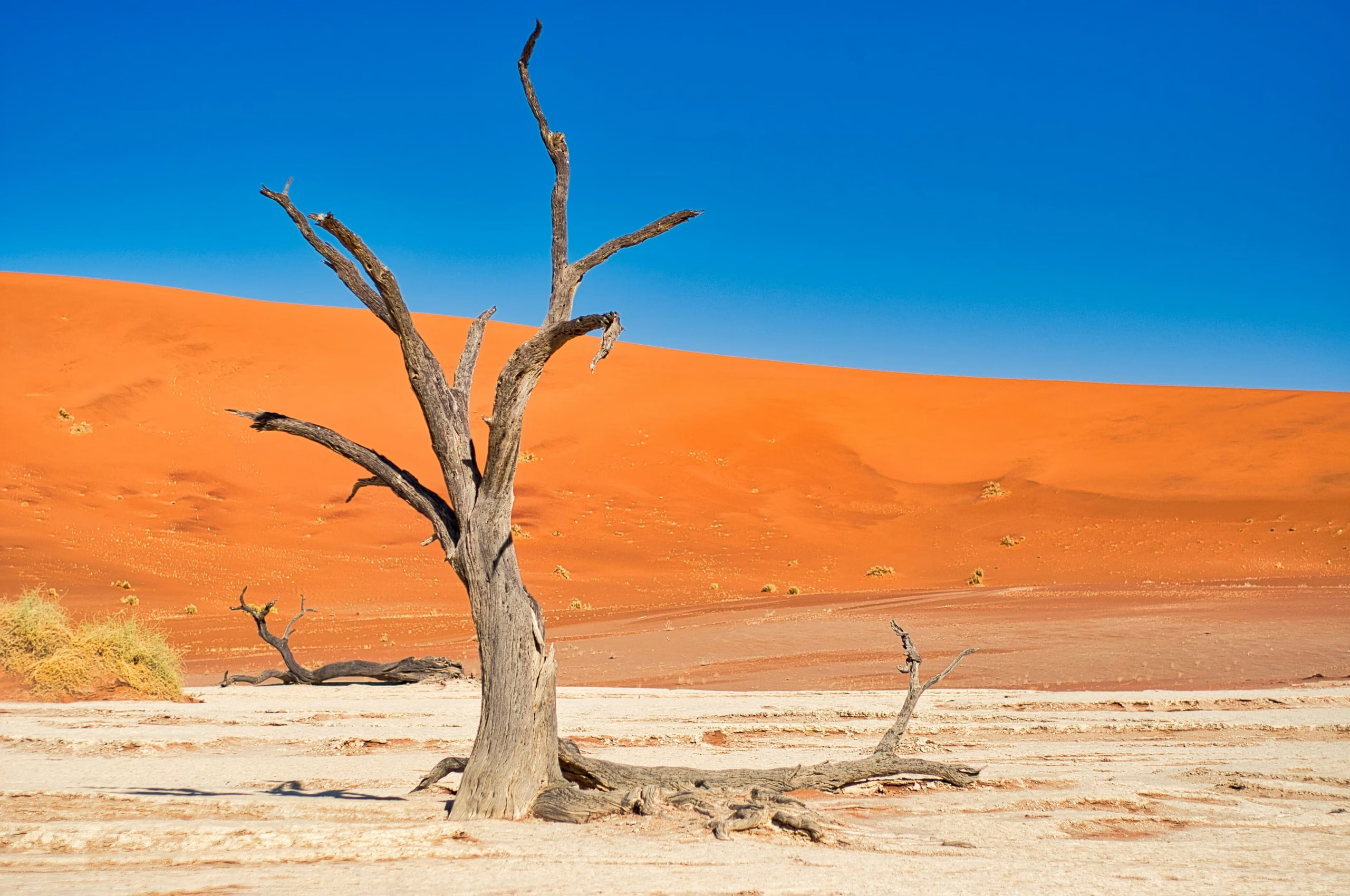
One-third of global soil is already degraded, however, compromising the health of people, nature and economies. We have degraded land and depleted its soil faster than they can recover, with more than 100 million hectares lost each year – an area the size of France and Spain combined.
Soil is a non-renewable resource on a human timescale. Two to three centimetres of topsoil can take up to 1,000 years to form, so its loss leads to irreversible damage, particularly in the arid lands that are home to more than 25 percent of the world’s population.
The cost of barren land
Unsustainable farming, deforestation and urbanization are degrading the planet’s land and depleting its soil faster than they can recover. The combined effects of land degradation and drought costs the global economy $878 billion every year, eroding food and water security, disrupting energy production and supply chains, and fuelling instability, forced displacements and conflict around the world.
World Soil Day, observed annually on 5 December, is an important reminder that we cannot continue to treat soil like dirt – healthy soil is both life and a lifeline. But soil’s true value remains under-represented in global policy and investment decisions. This year, amid cascading climate, food and water shocks, soil must be recognized for what it is: a cornerstone of global resilience.
Today, the majority of agricultural support still goes to practices that can degrade soil and ecosystems. Redirecting these incentives toward sustainable land management could yield enormous benefits for people, nature and the economy.
The dividends of land restoration
Soil acts as a powerful carbon sink and is home to a quarter of the world’s biodiversity.
As the co-chair of the Global Future Council on Healthy Soils and Land, Dr Rattan Lal, who is also Professor of Soil Science at Ohio State University, explains: “Healthy soils are natural-shock absorbers. They store water, retain nutrients and buffer against floods and droughts, protecting communities from climate extremes. Caring for soils is, in every sense, caring for people.”
Investing in healthy soil and land pays off. Each dollar spent on restoring land returns an estimated $7-30 through higher yields, carbon storage, and environmental and human resilience. Around the world, we see how restoring soil can boost productivity, increase farm profitability, reduce hunger and malnutrition, improve water quality, and halt desertification and deforestation.
This can be seen in the Sahel’s Great Green Wall in Africa, in agroforestry initiatives in Latin America and in regenerative agriculture efforts across Asia and Europe. Improving soil health works. Initiatives like these must be the rule, rather than the exception.
Global momentum on healthy soil
More than the earth beneath our feet, soil is the unseen infrastructure underpinning every Sustainable Development Goal and the three Rio Conventions on Land (UNCCD), Biodiversity (CBD) and Climate (UNFCCC).
With food systems emerging as a core area of convergence across the three Rio Conventions, it is clearer than ever that soil health is a systemic challenge requiring coordinated and coherent action at all levels. Embedding soil health into corporate planning, financial decision-making and policy frameworks is key to scaling impact. Platforms such as the World Economic Forum’s Global Future Council on Healthy Soils and Land, UNCCD’s Business4Land and 1t.org are bringing science, policy and business together to translate soil stewardship into measurable global action.
The Global Future Council on Healthy Soils and Land is looking to anchor soil in the global climate, biodiversity and food agendas, and to shape a coordinated leadership message at three the Rio Convention summits, including the UNCCD COP17 in Mongolia in August 2026.
The Business4Land initiative, launched at the World Economic Forum’s Annual Meeting in January 2024 and formalized at UNCCD COP16 last year, is working to involve and support private actors in sustainable land management. Helping companies approach it as a supply-chain resilience strategy, for example, creates a groundbreaking opportunity to address the financing gap that sees only 6 percent of today’s funding for land restoration and drought resilience coming from the private sector.
Together, these initiatives are translating science into corporate sustainability frameworks like the Science-Based Targets Network, the Taskforce on Nature-related Financial Disclosures and the International Sustainability Standards Board. They are also supporting soil metrics in sustainability disclosure, piloting regenerative landscapes, and aligning targets and practices acr
Republished with permission from World Economic Forum